our Railroad
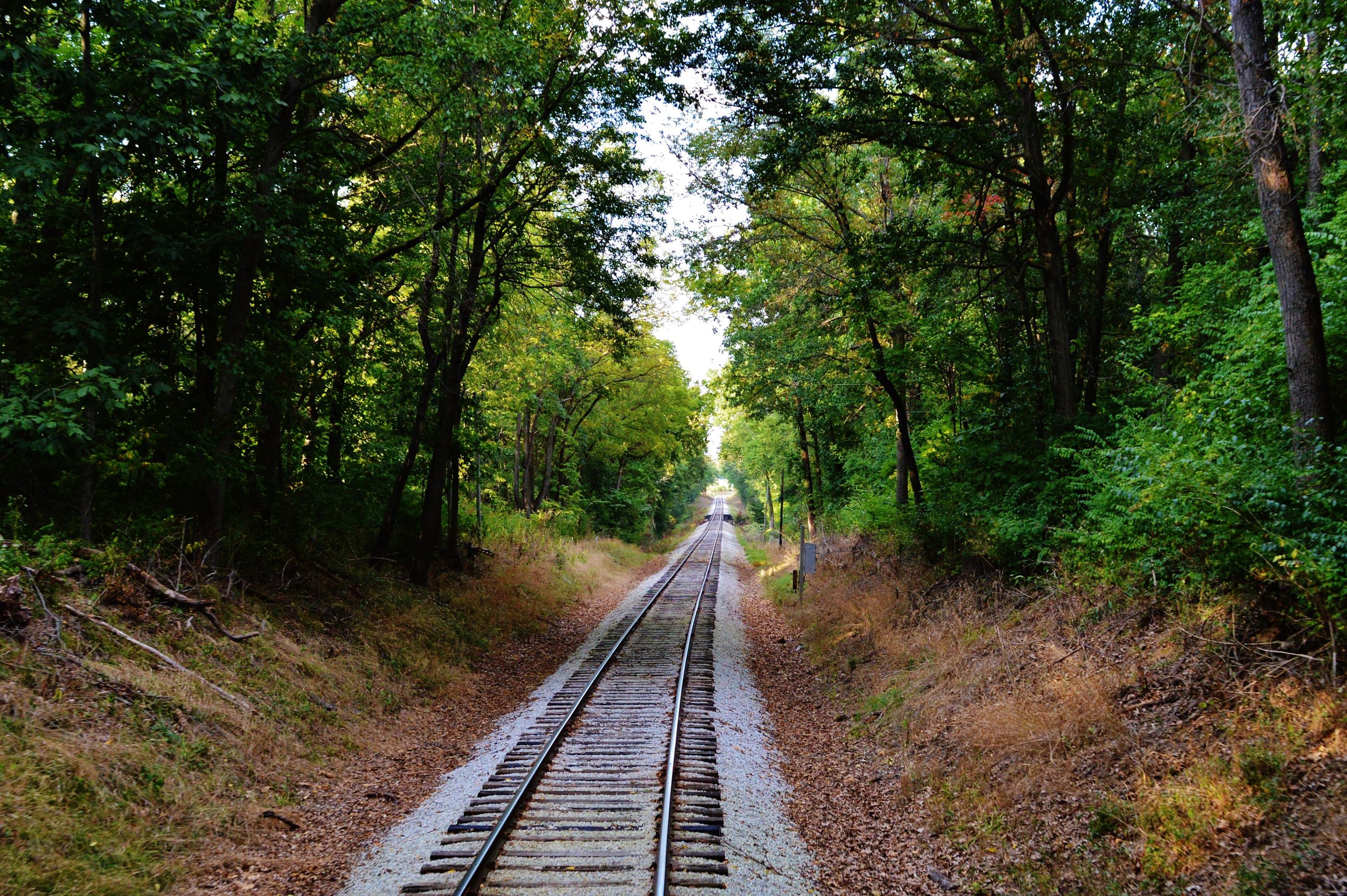
The Monticello Railway Museum offers train rides over several miles of historic rail lines once operated by the Illinois Central and Illinois Terminal Railroads. Each of our two lines have unique histories and allow riders views of beautiful rural Piatt County that can’t be seen from an automobile or airplane. Scroll down to learn more about our route.
THE TERMINAL DIVISION
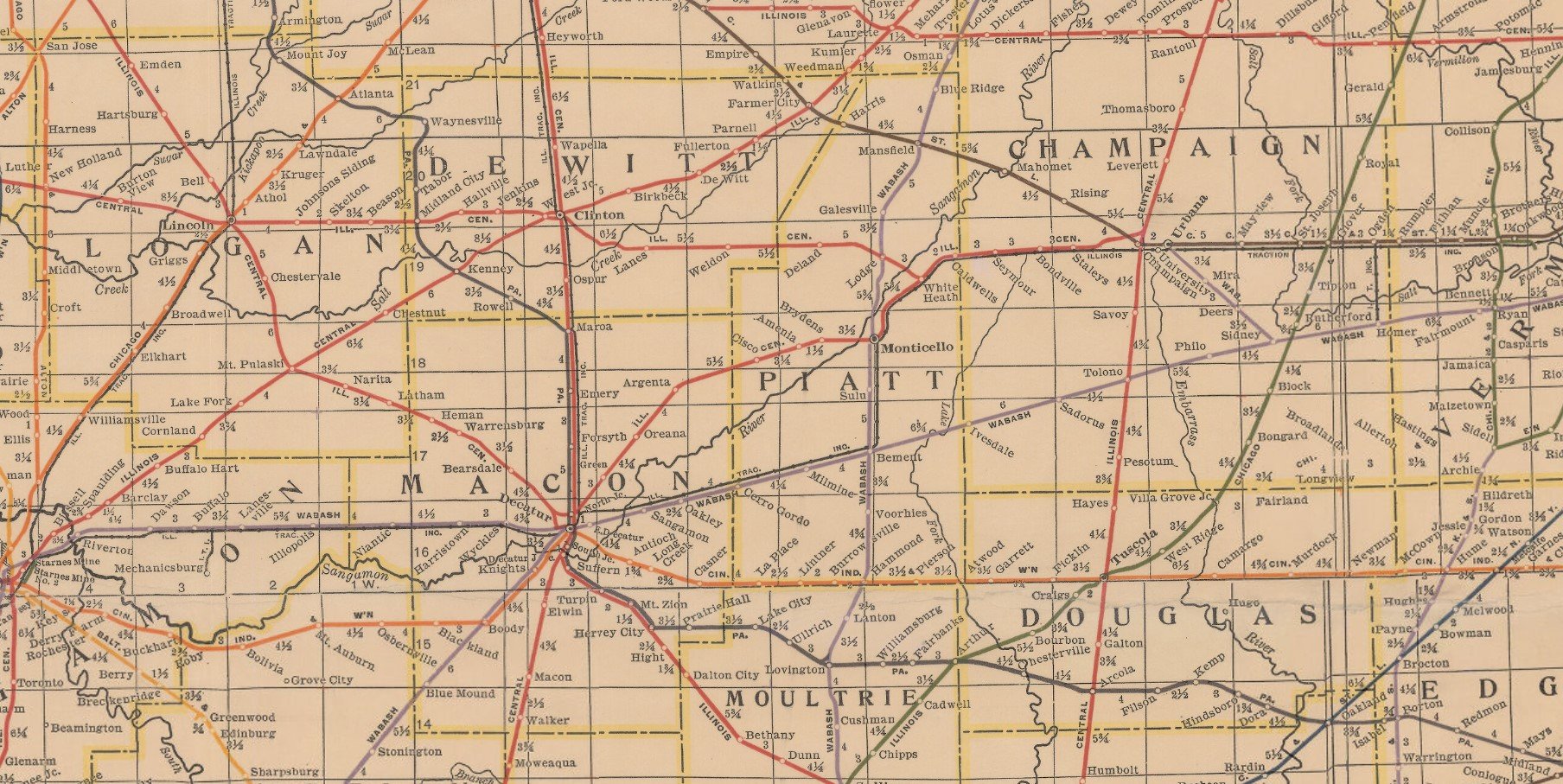
The Terminal Division of our railroad occupies a section of right-of-way running between the museum’s Camp Creek Yard to the south edge of White Heath, Illinois. Built by the Illinois Traction System (later known as the Illinois Terminal) in the early 1900s, this route was part of the massive Illinois Traction interurban empire that connected St. Louis with the central Illinois cities of Springfield, Decatur, Peoria, Bloomington, Champaign and Danville.
Interurbans were regional passenger and freight railroads whose locomotives and self-propelled passenger railcars typically gained power from electricity traveling through overhead wires (think of a long distance streetcar system). The section of the Illinois Terminal that the museum now occupies was part of the Decatur to Champaign route.
In the 1950s, increasing competition with automobiles led to many interurban railroads around the country losing tremendous amounts of business and ultimately ceasing operations. In 1955, the Illinois Terminal discontinued passenger service on their line through Monticello. Freight trains, which eventually switched to using traditional diesel locomotives instead of electrics, hung on for a few more years before being rerouted over the Illinois Central Railroad, which owned a line that closely paralleled the Illinois Terminal between Monticello and Champaign. The original interurban line was abandoned and the tracks were ripped up for scrap.
In 1970, the then-new Monticello Railway Museum, known as SPUR at that time, purchased five miles of the original right-of-way north of Monticello for use as their museum site and operating railroad. This right of way ran from 400 feet south of Cemetery Road on the North side of Monticello, to Meridian St. in White Heath. A stretch of the interurban railroad gained new life when volunteers laid new track and began running trains over it in 1971. Over the next 16 years, volunteers would build more and more track on this right of way each year, eventually building two miles of main line on the former ITRR right of way. This line would serve as the main route for museum excursion trains until 1987.
Following the acquisition of the adjacent Illinois Central line in 1987, the Illinois Terminal became known as the museum’s Terminal Division, while the Illinois Central became known as the Central Division. Today, regular museum trains use a small section of the Terminal Division between the yard and the Nelson Crossing depot, before taking a connection to the Central Division just north of the depot. The rest of the Terminal Division from the connection north to Blackers is currently used for storing railcars.
THE CENTRAL DIVISION
This trackage was originally chartered by the Monticello Railroad Company in early 1861, with actual construction not beginning until 1871. Completion to Monticello occurred in December of 1871, with construction pushing on to Decatur via Cisco, Armenia, Argenta and Oreana arriving in Decatur in 1873. Ownership of the museum’s Central Division trackage changed several times in the following years, until winding up as a part of the Illinois Central (IC) Railroad. The IC designated the line running from Decatur through Monticello to White Heath as their Decatur District. White Heath and on to Champaign, it was part of the Havana District. At Decatur and Champaign, it connected with other Illinois Central lines, and at White Heath (currently the north end of the museum’s trackage), was the Junction with the Havana District, which continued westward to Havana, IL via Clinton, IL, with the Decatur District, from White Heath to Decatur, being a lower volume branch line.
On August 10, 1972, the Illinois Central merged with the Gulf, Mobile & Ohio Railroad to form Illinois Central Gulf (ICG). Soon after the merger, the new ICG management began eliminating less-profitable lines.

An Illinois Central steam locomotive in Monticello circa 1950. This locomotive, a 2-8-0 Consolidation type, is an example of typical locomotives used on branch lines like the Decatur District in the steam era.
The Decatur and Havana Districts managed to survive into the late 1980s, but in 1987, the ICG filed for abandonment of much of the lines. That same year, the Monticello Railway Museum purchased just under seven miles of main track, and an additional one-half mile of other trackage consisting of sidings and wye tracks. The main track runs from just west of downtown Monticello to north of downtown White Heath on a remaining portion of the Havana District. Included is that portion of the Havana District main line towards Clinton, which ends on the west side of old Rt. 47. The line to Havana was also abandoned beyond this point. The museum site sits at roughly the halfway point. A connection was soon constructed, linking the newly acquired Central Division with the museum’s Terminal Division.
The Illinois Central’s depot in downtown Monticello had been demolished in the early 1970s, but on May 29, 1987, the Wabash Railroad’s depot was relocated to a new site along the Central Division in downtown to serve as a station for museum trains. After extensive rehabilitation work was done to the line after it was acquired from the ICG, the Monticello Railway Museum operated its first train into downtown Monticello.
Today, the Central Division is our main line, and most trains we operate traverse it between downtown Monticello and the museum.

An Illinois Traction System interurban car makes a stop at the Monticello depot circa 1910. Located at the corner of Market and Livingston Streets, the depot was demolished in the 1960s and the site is now a parking lot.