A structural engineer was hired to design the foundation for the water tank and its columns. Crews excavated around the area and concrete was poured for foundation. Next comes forms for the columns that will support the tank legs. The rebar for the columns visible in this photo extend another 2 feet into the concrete.
Concrete has been poured for the columns that will support the timber frame of the water tank. Soil was then back filled around these foundations, and the pad for the pumphouse can be seen in the background.
The concrete slab in the foreground is for the pumphouse building. Steam locomotives require water to be treated to help preserve the boiler, and MRM uses a reverse osmosis (RO) system for this purpose. This building will house that system, and includes a below grade vault to allow the connected plumbing to be located and maintained where it will not freeze.
This is the top of the water tank frost box. This is a pipe chase that extends from 5-1/2 feet below grade, and carries all the plumbing related to the water tank and water crane systems. A wooden, heavily insulated chase will be built on top of this and extend up to the bottom of the water tank, and will utilize heat from the earth rising from the lower frost box to prevent freezing of the plumbing in the winters.
Volunteers also constructed a new switch that will connect the future track alongside the water tank and building to the Illinois Terminal mainline. This track will also lead to the planned turntable and roundhouse at Nelson Crossing.
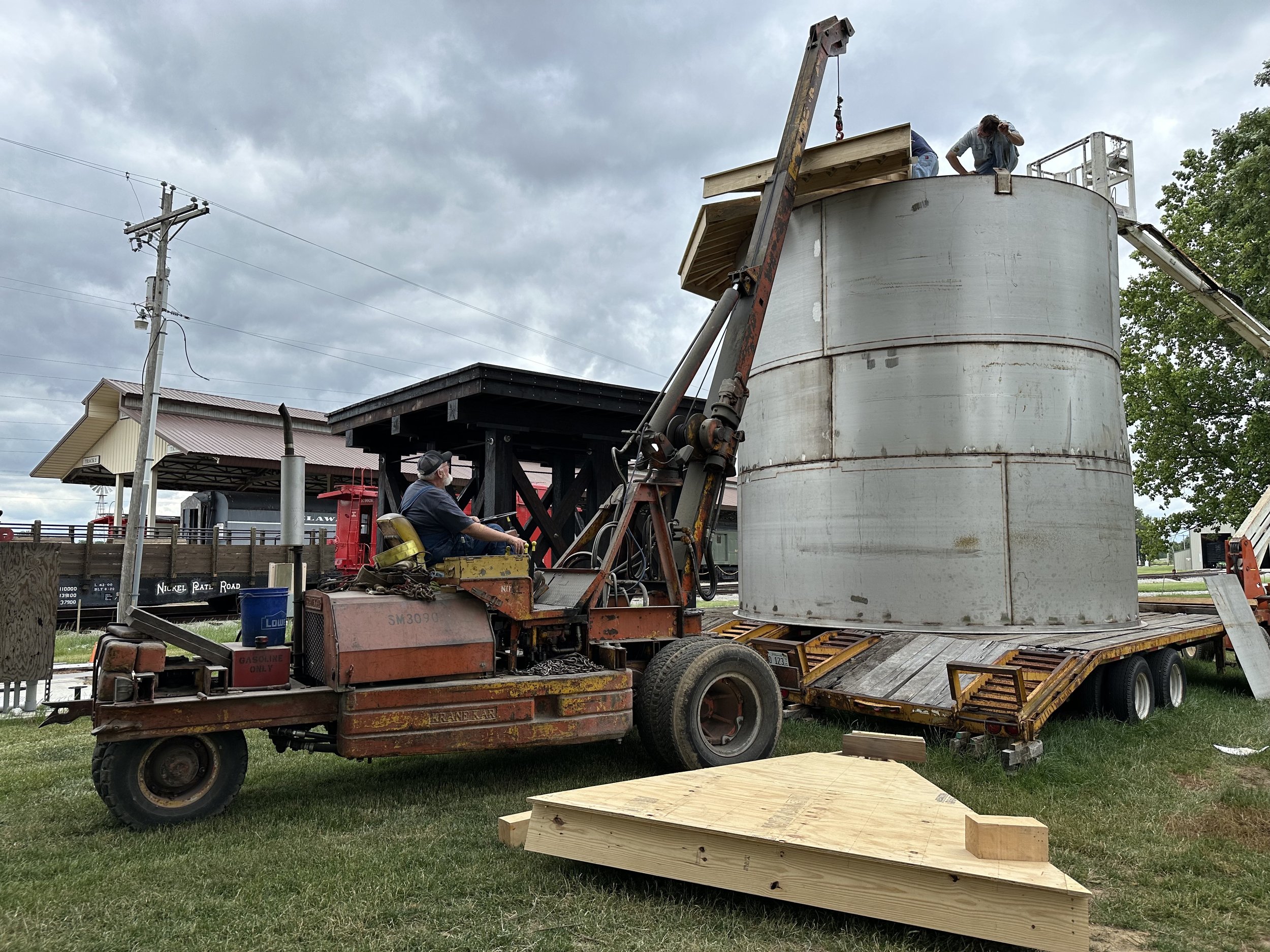
Shown in this photo is the roof for the water tank, made up of eight, pie-shaped sections. These will be installed once tank assembly is completed, and before the tank is lifted onto the raised platform.
Shown here are two pieces of timber that are part of the spout support system. The timber with the swiveling bronze sheaves is the top timber that supports the discharge end of the spout. The other timber will support the tank-end of the spout. These will be attached to a pair of timbers that run from the tank platform to the roof of the tank.
The tank support frame is seen here being erected by volunteers in October and November of 2023.
The complete frame is seen in this view from the Nelson Crossing platform. Future steps include erecting the tank on top of the frame, and the construction of the turntable lead track in front of the tank frame.
The water tank that will sit atop the frame was delivered in two pieces due to its size. The two pieces will be mated and welded together before being placed on top of the frame.
The water tanks sections have been mated together and are being welded to become one tank. The stainless steel tank will be wrapped in cedar to give the appearance of the tanks that were used by the railroads up through the end of steam locomotive use, but will require far less maintenance than an actual wooden tank.
Across from the Nelson Crossing depot on the Illinois Central mainline side, platform improvements were made including the base and underground vault for the water crane and valve. This will supply water from the adjacent overhead tank for steam locomotives parked here.
The water crane is seen here being erected by volunteers. This water crane was originally used by the Chicago and Eastern Illinois Railroad at their Danville, IL, Oaklawn shops. It was saved by and donated to the Museum by the Danville Junction Chapter of the NRHS.
The water crane is shown installed along the west platform. This will permit steam locomotives to be watered while parked along the Illinois Central mainline.
Once welding the tank was complete, roof installation began. The roof is shown being installed in sections by volunteers. Carefully measurements and adjustments were required to align the individual sections correctly.
The roof is completely installed on top of the tank
Work has begun to install a water tank, water crane, and a pumphouse at Nelson Crossing. This work is taking place along the future lead track to the planned turntable and roundhouse building. These facilities will support steam locomotive operation at the museum, and replicate those seen across the country in the heyday of steam locomotives. The general design of both the water tank structure and the pumphouse are taken directly from historic Illinois Central Railroad 1916 valuation reports on facilities in both White Heath, IL, and Monticello. This blog post covers the construction of the foundations for the water tank and pumphouse, erection of the wooden tank support frame and tank, and installation of the water crane.