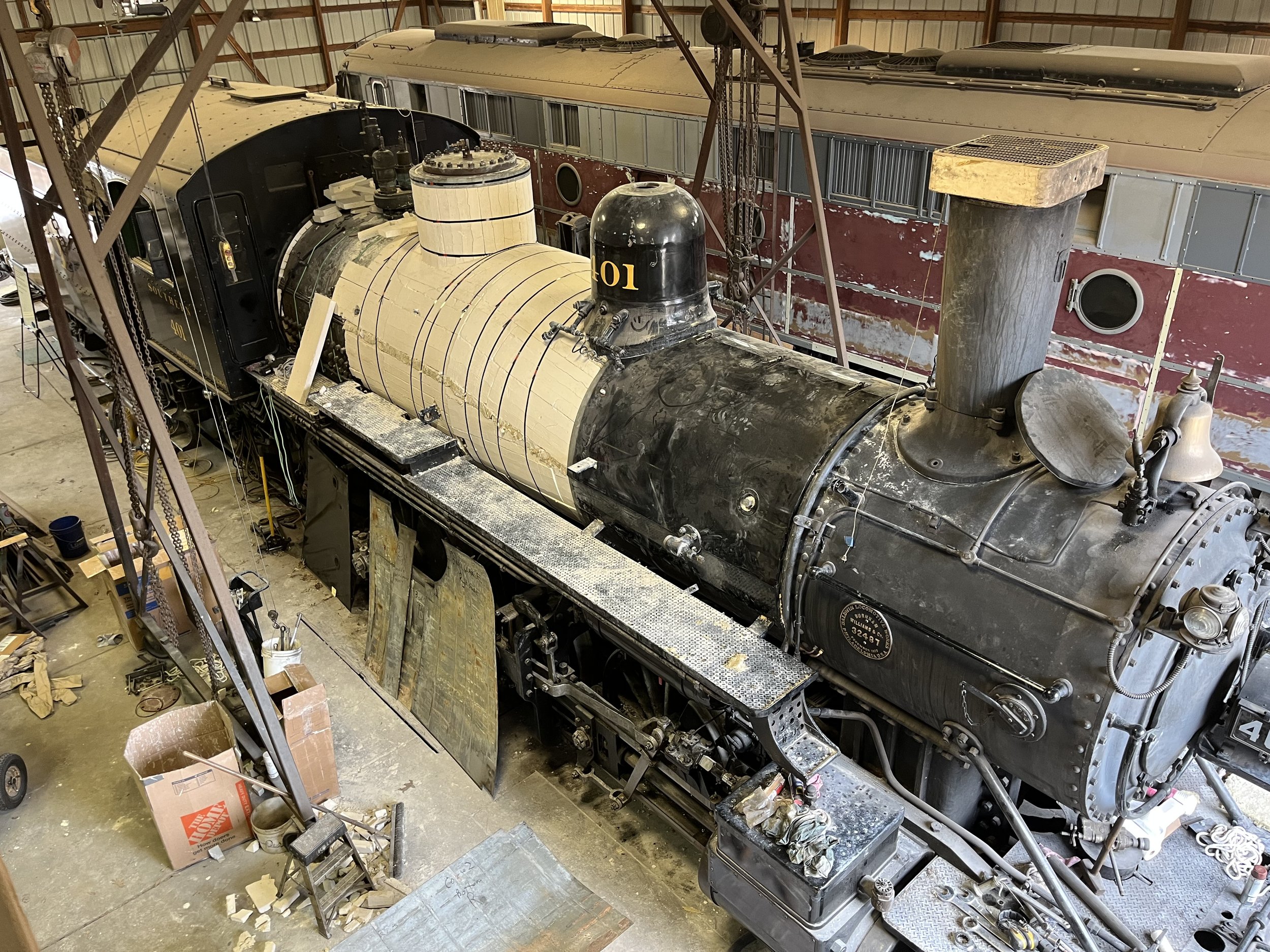
Volunteers begin the rebuild process by removing the boiler jacketing and exposing the lagging the underneath. The lagging provides insulation to the locomotive’s boiler, and will be replaced during the rebuild. The jacketing was carefully inventoried for reassembly once the inspection is complete.
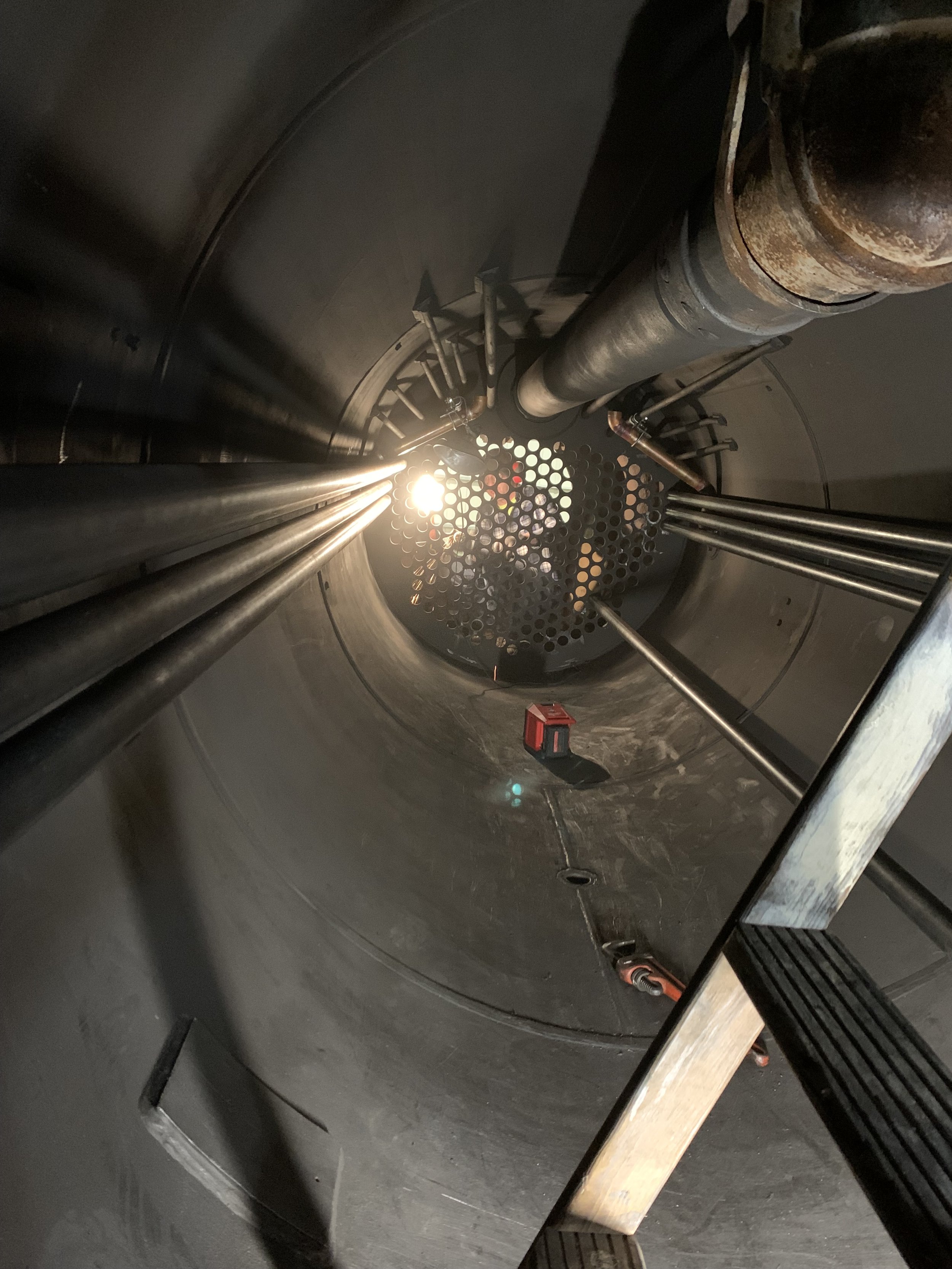
To perform the boiler inspection, volunteers needed to remove all of the boiler tubes. In preparation for this task, volunteers have to crawl inside the boiler to begin cutting them out.
The tubes are held in place in the boiler by tube sheets at the front and rear of the boiler. Here, volunteers are trimming welds off the front tube sheet.
The completed product showing all welds on the front tube sheet ground down in preparation for tube removal.
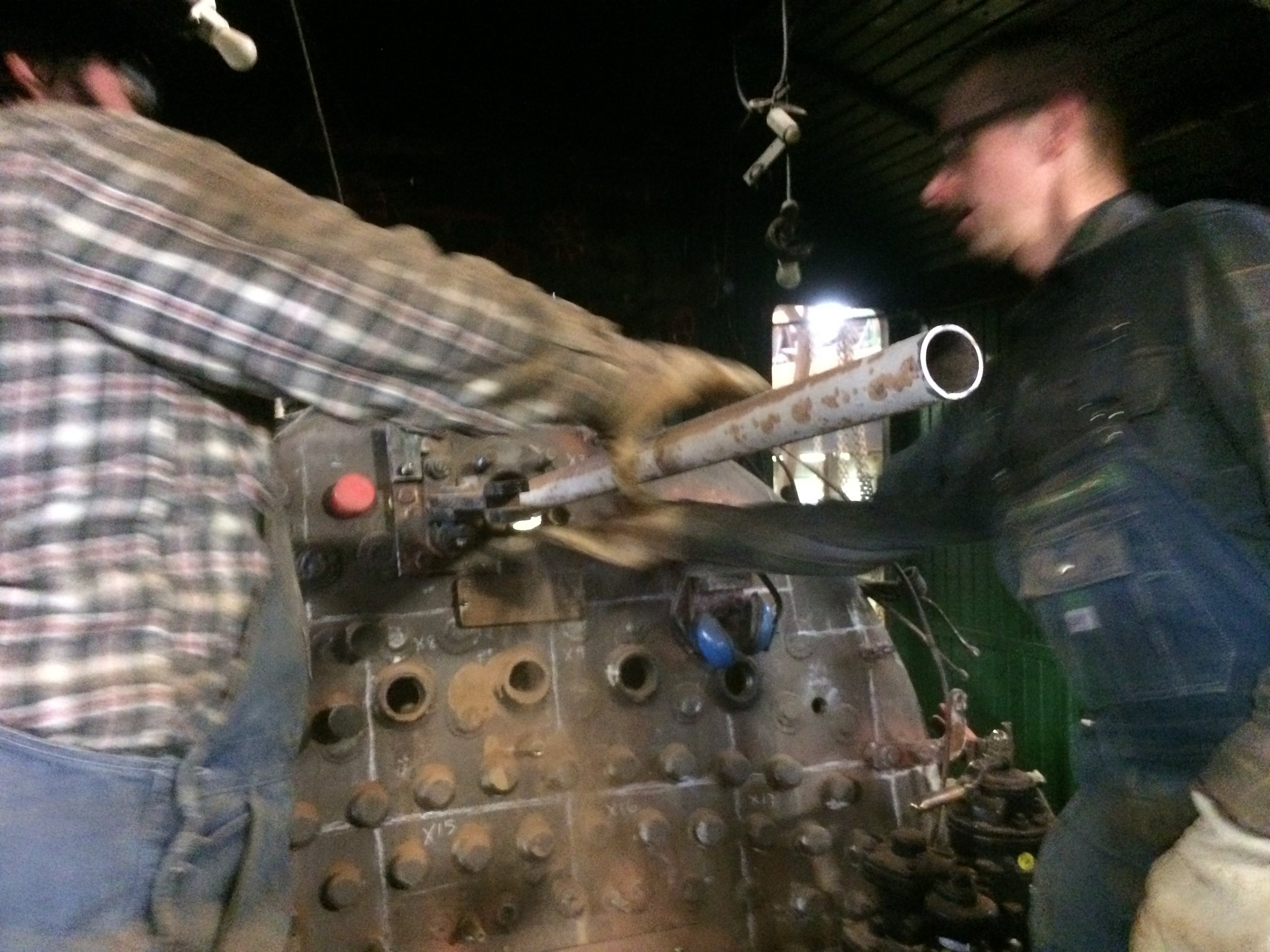
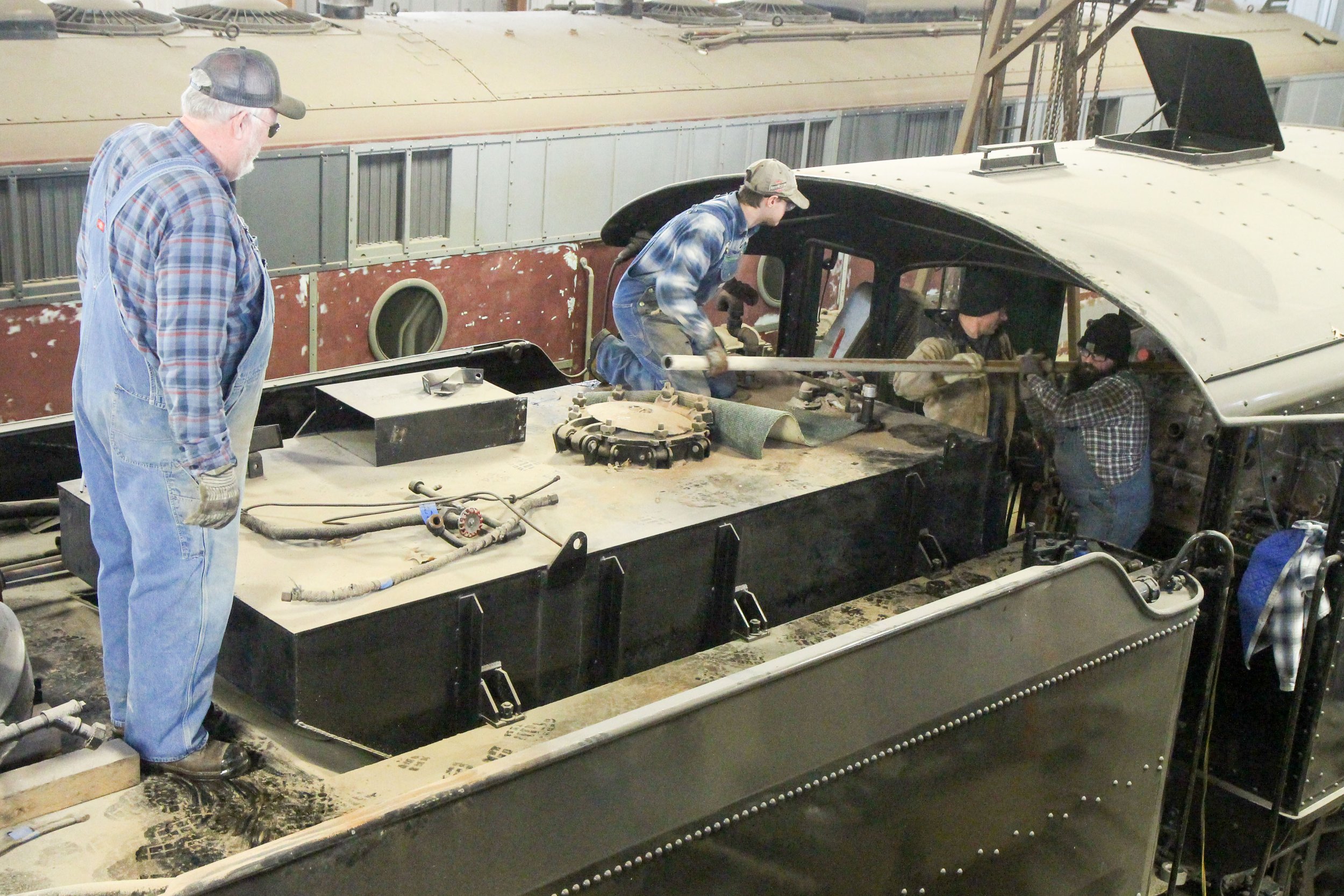
Each tube is then manually removed from the boiler, which requires a coordinated effort to remove the tubes through a hole above the firebox.
Another view of volunteers removing boiler tubes.
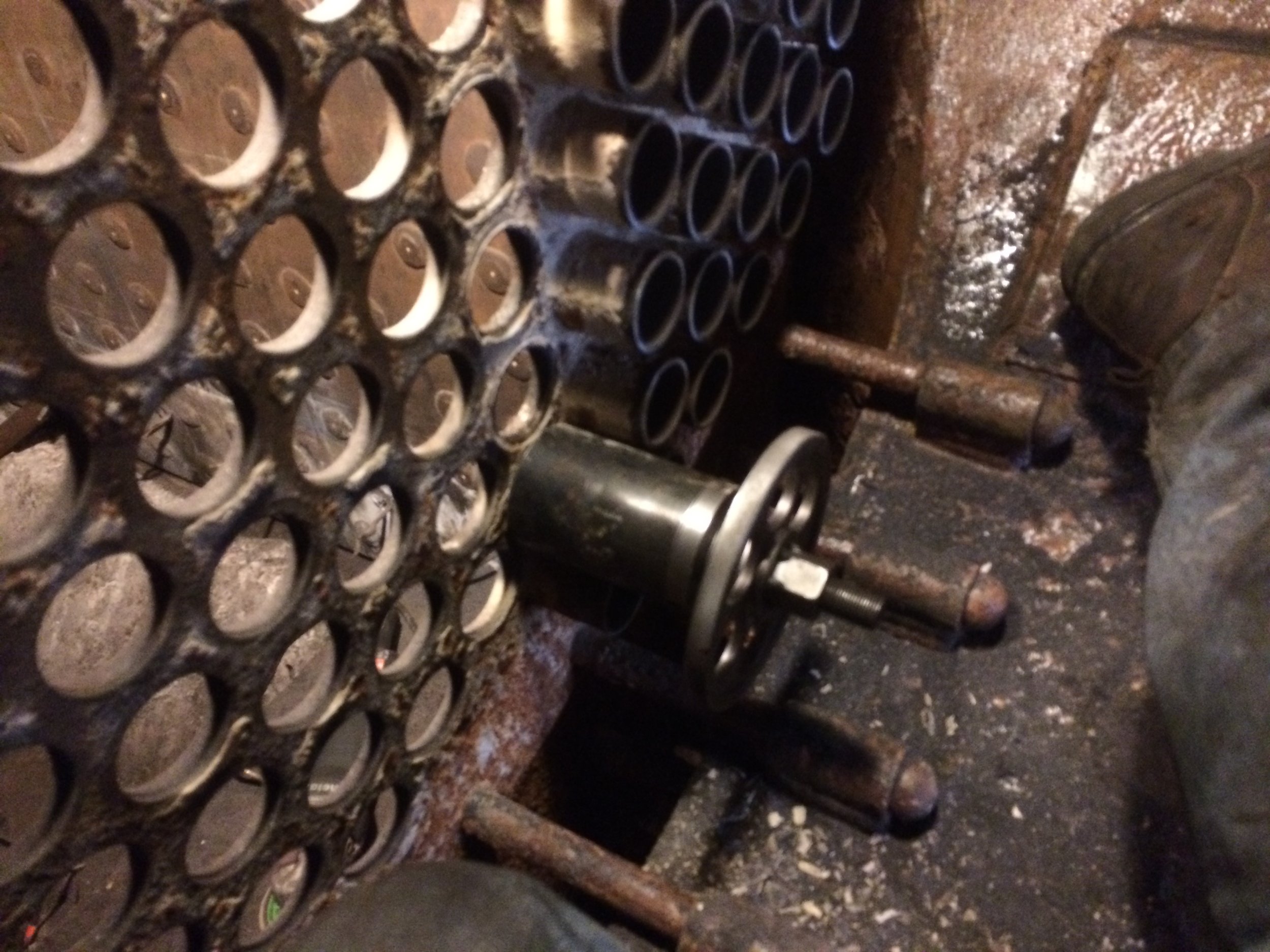
After a majority of tubes are removed, tube stubs remain from where they were cut off before meeting the tube sheet welds. These studs must be individually cut off before the tube sheet can be prepared for the next step in the process.
A view of cutting off the tube stubs from the rear tube sheet.
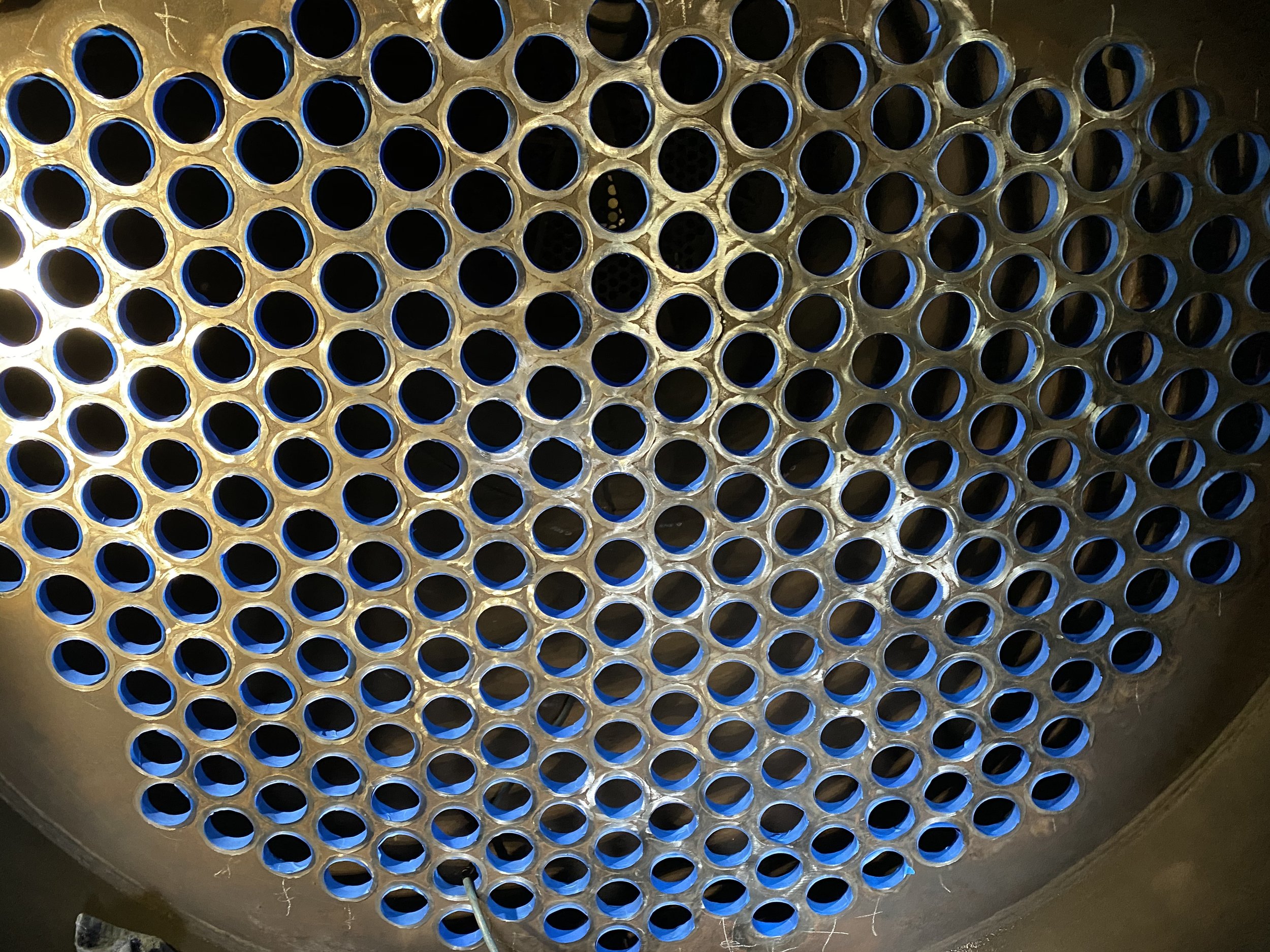
In advance of sand blasting and coating the boiler, volunteers meticulously applied tape to both tube sheets. This ensures the mating surface where the tube enters the tube sheet remains clean.
A view inside the boiler looking torwards the cab that shows the rear tube sheet, firebox, and boiler after sandblasting.
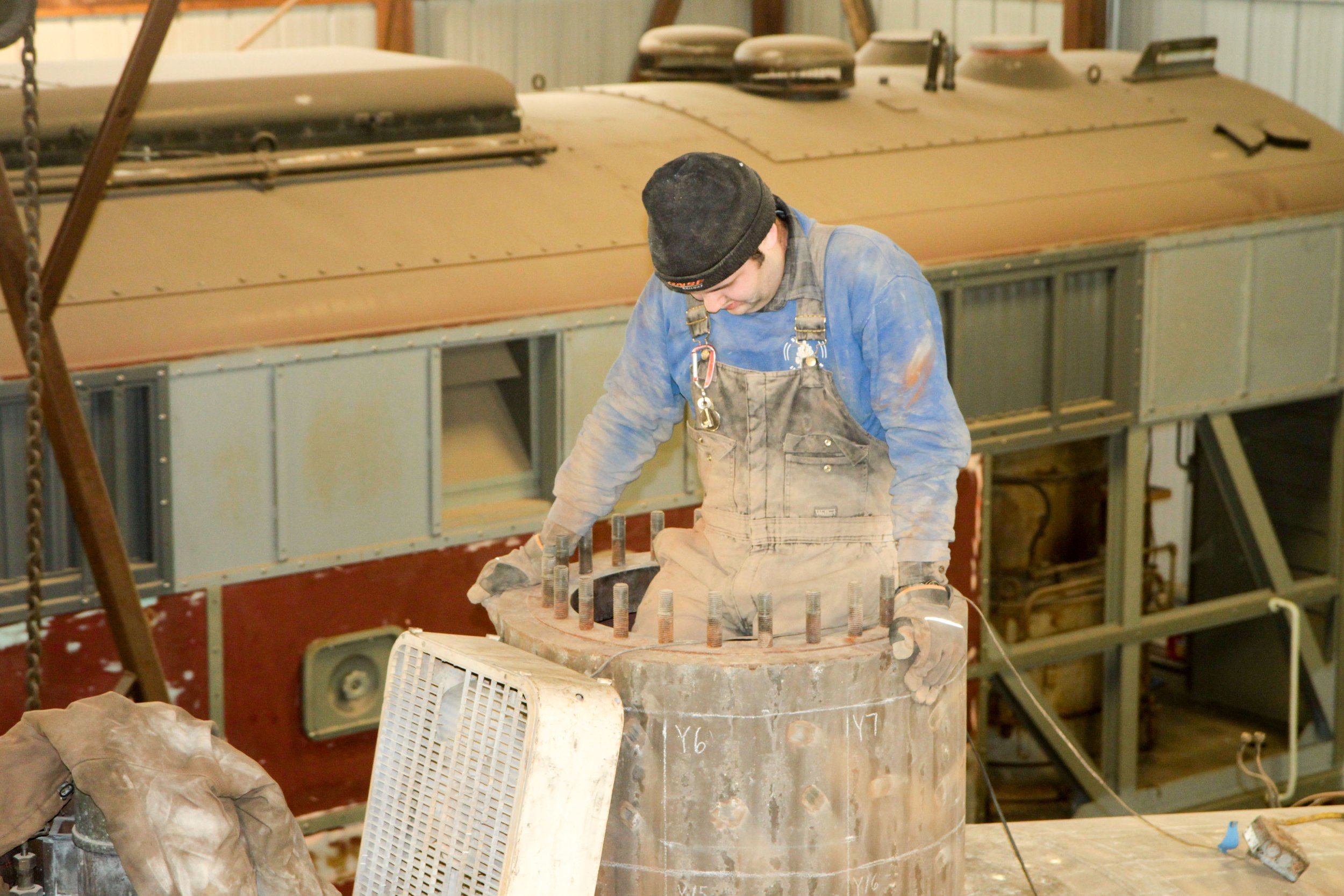
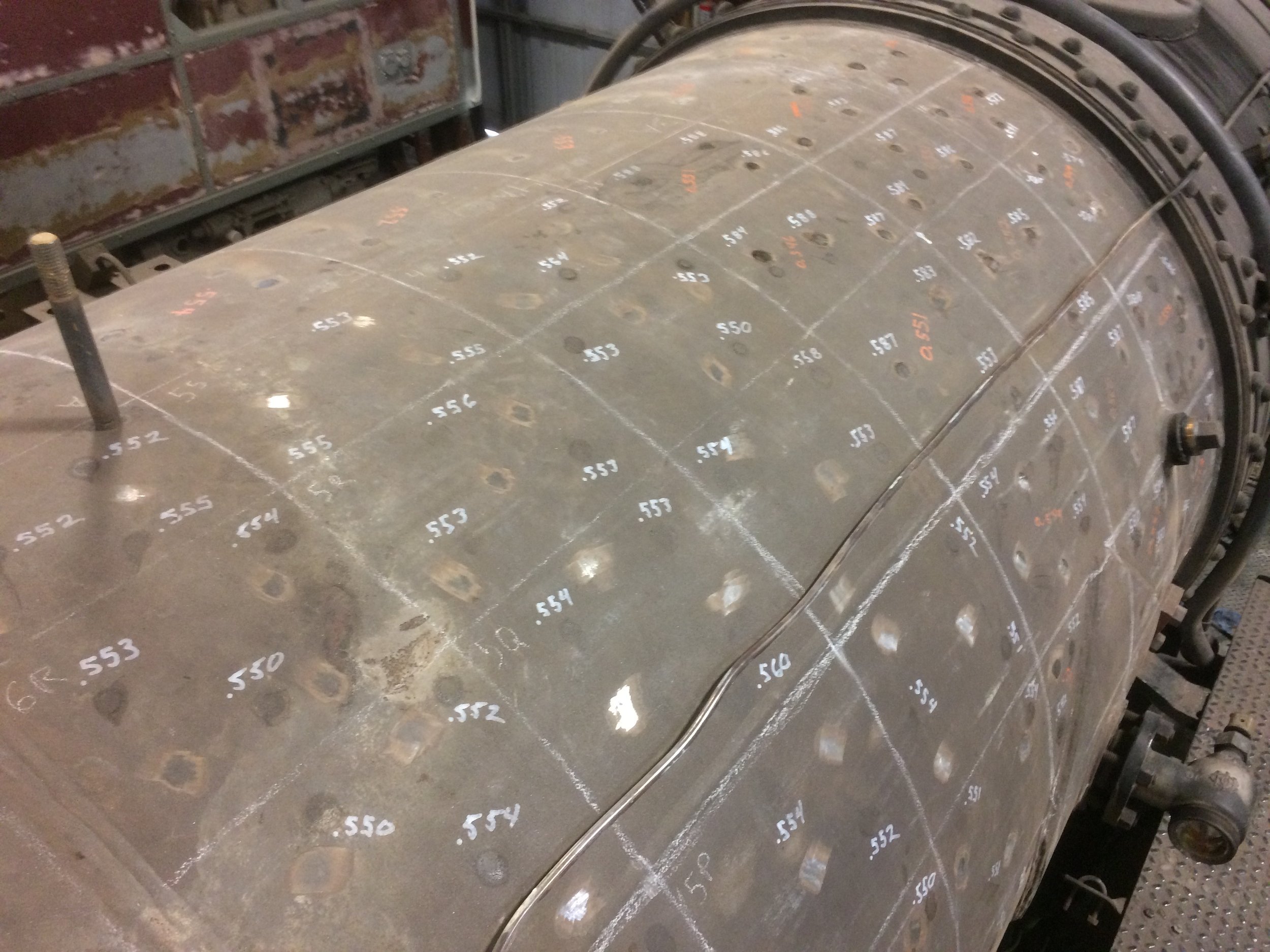
One of the major purposes of this inspection is to determine the thickness of the steel boiler shell. This is accomplished by using an ultrasonic (UT) machine. A grid is applied to the boiler with chalk that indicates where readings will be taken for these thickness measurements.
A grid is also applied to the interior of the boiler so measurements can be taken.
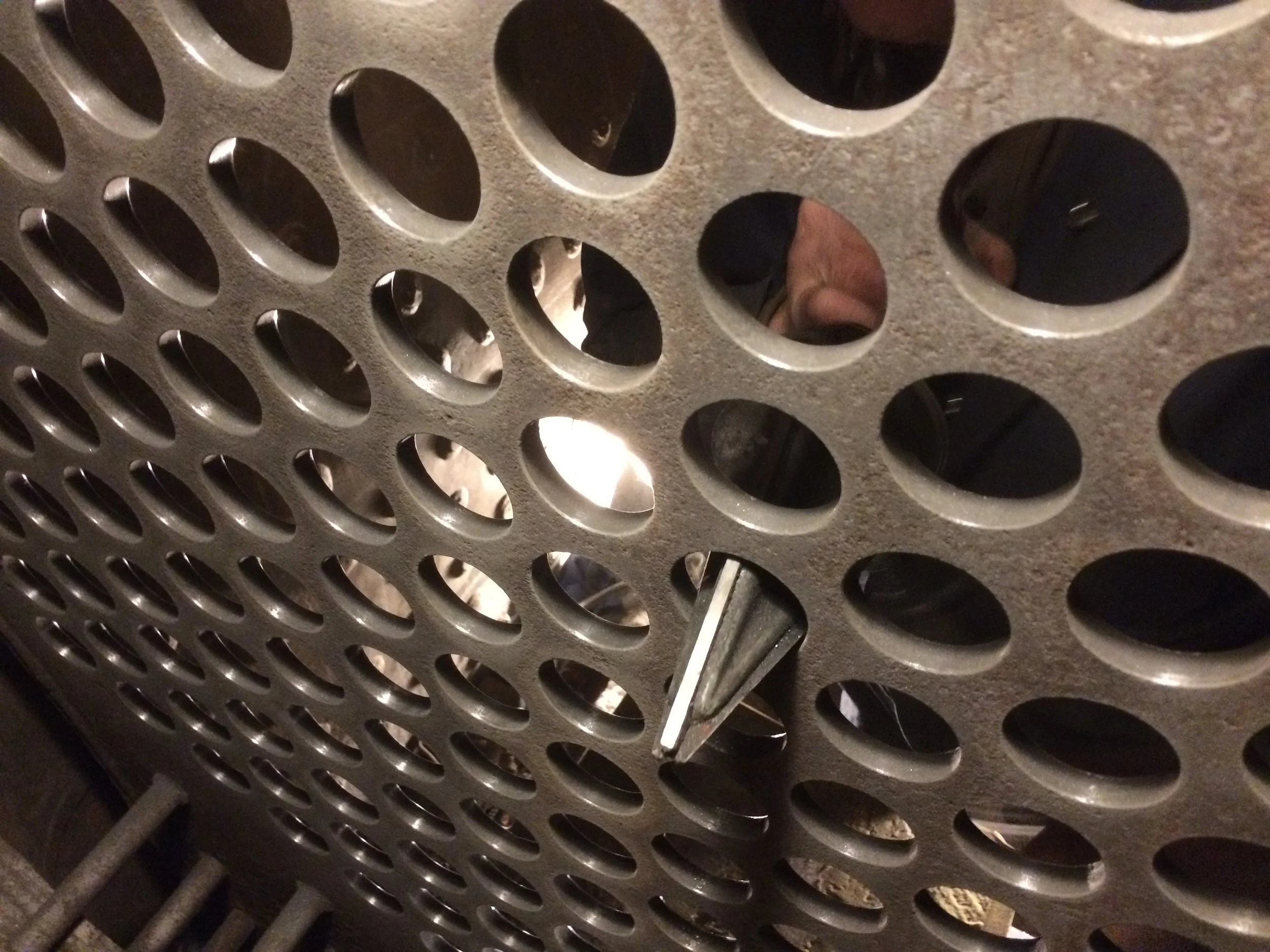
Once the inspection has determined that boiler shell thicknesses are acceptable, volunteers begin the reassembly process. This includes installing new boiler tubes, which requires preparing the mating surfaces in the tube sheet to receive the new tubes.
The new tubes are staged alongside #401 in the shop. These new tubes will be inserted through the smokebox and installed in place by volunteers.
A view inside the boiler with the first few boiler tubes installed.
Once all the tubes have been installed, they must be trimmed to meet the tube sheet before being rolled, which connects the tube to the tube sheet. This view shows the trimming occurring inside the firebox.
Once the work on the interior of the boiler is complete, volunteers begin to install new lagging insulation on the boiler. Once the lagging is installed, the jacketing will be reinstalled on top of the lagging.
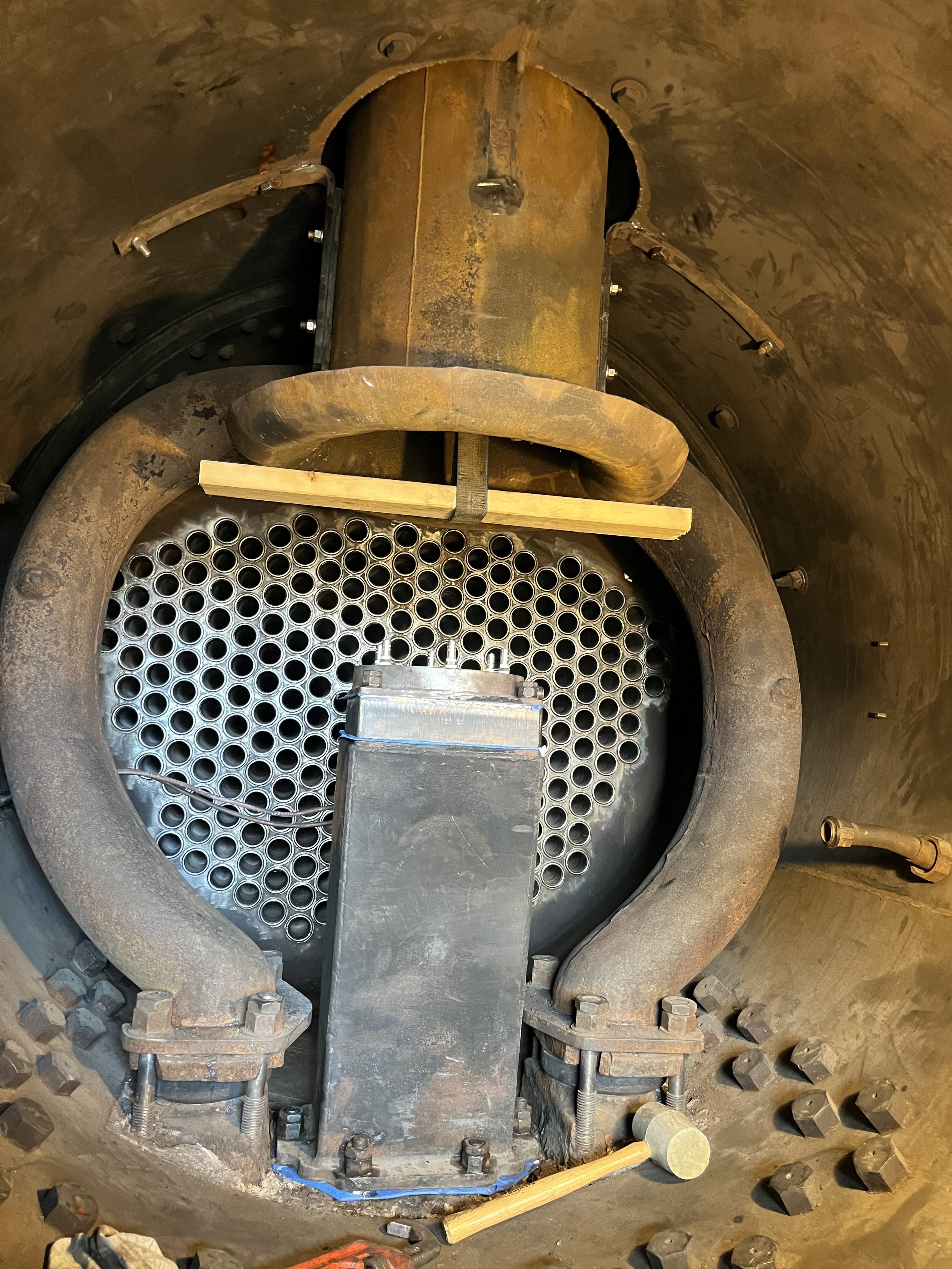
Inside the smokebox, the blast pipe and nozzle are reinstalled in front of the recently installed boiler tubes,
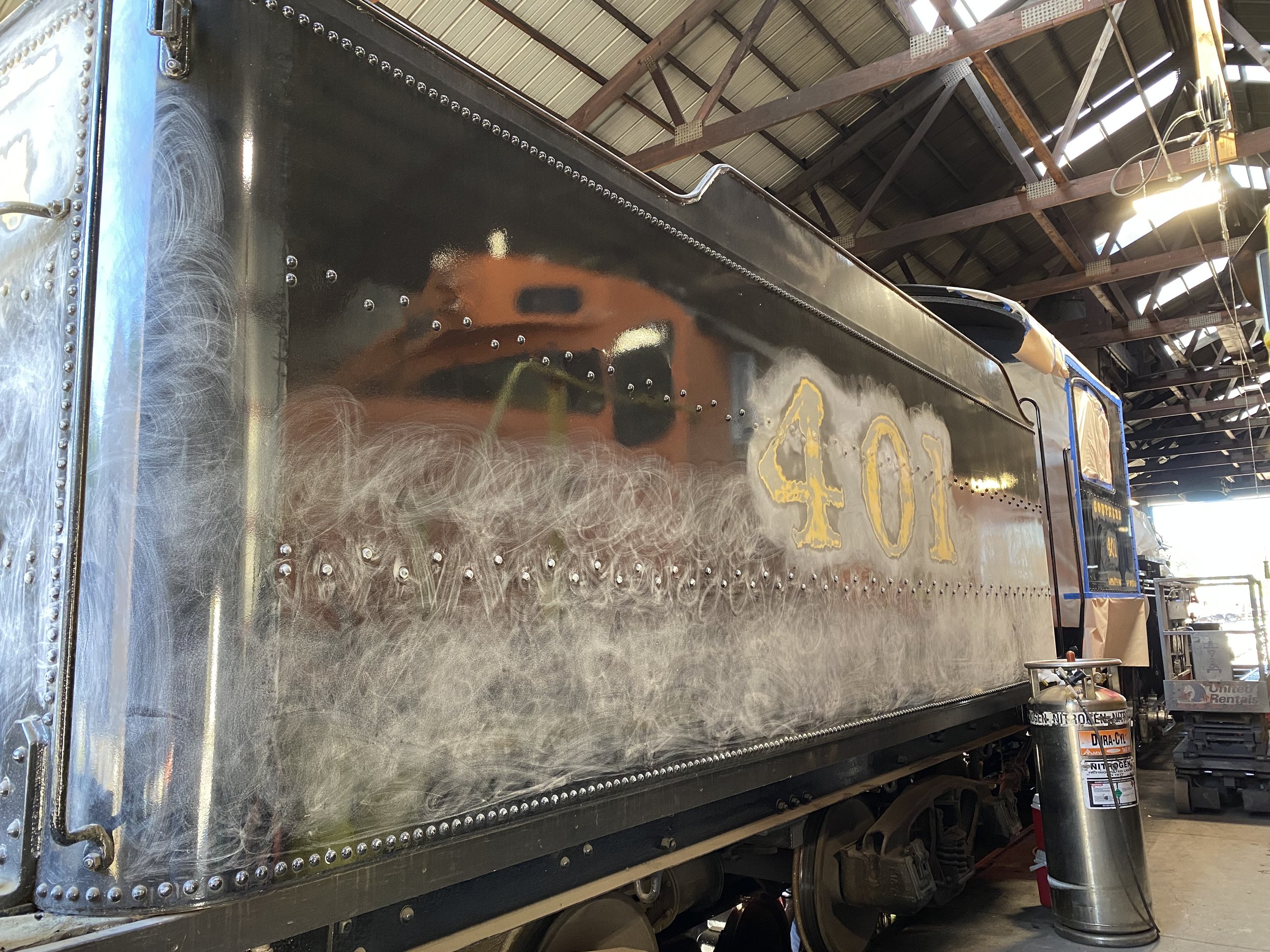
Before she returns to service, volunteers also repainted portions of the engine, including partially repainting the tender.
Victory! After successfully passing her FRA inspection, #401 undergoes a test fire up inside our shops.
#401 is seen her on her first trip after completing this inspection, to be enjoyed by many more visitors for another 15 years!
The Federal Railway Administration (FRA) requires all steam locomotive operators in the United States to perform a thorough inspection of a steam locomotive’s boiler every 15 years or 1,472 service days, whichever comes first. While our steam locomotive #401 wasn't due for this inspection until 2021, the COVID pandemic in 2020 presented an opportunity to perform this work while minimizing impacts to train operations, as the museum operated a reduced schedule that year. Museum volunteers disassembled parts of the engine, performed a detailed inspection of the boiler and associated parts, reassembled the engine, and completed other work while the locomotive was torn down. This blog chronicles the many steps of that process, all completed by hard-working volunteers in 2020 and 2021. The engine successfully returned to service for the 2022 operating season.